The Origin
In 2025, the STEAM program at Colégio Bandeirantes challenged its sophomore students to create a scientific project centered on the future of humanity. Olívia wanted something at the intersection of science, technology, and real-world impact — and nuclear physics was the topic that imposed itself naturally. Her fascination with physics had started earlier: she had begun watching The Big Bang Theory on her own, drawn to the themes the show explored — dark matter, string theory, the physics of things that lie beyond what we can see. It wasn't just entertainment; it was the confirmation that there was an entire world of impossible questions that real people dedicated their lives to trying to answer.
Researching for the project, she noticed something that unsettled her: nuclear energy was at the center of every major discussion about climate, energy, and space exploration — yet it almost never appeared in the classroom. And when the subject did come up outside of school — in the news, in conversations, in popular culture — it almost always came loaded with fear and misinformation, as if nuclear were synonymous with destruction rather than possibility.
But nuclear physics is exactly that: possibility. To power billions of people. To sustain cities on Mars. To one day propel spacecraft beyond the Solar System. Mastering atomic energy isn't just an answer to the climate crisis — it's what separates a civilization that survives from one that explores the universe.
With that in mind, she chose the topic for her project: nuclear fusion. Not the fission of the reactors that appear in the news, but fusion — the same reaction that powers the Sun, and the most promising bet for the energy of the future.
With a group of four friends, she wrote a scientific literature review on nuclear fusion, published in ReviSTEAM 2025, a peer-reviewed scientific journal. During their research, they visited the Institute of Physics at USP to see Brazil's tokamak firsthand — and for the presentation, they built a 3D model of the reactor. The project was presented at the school's STEAM Festival, and among all the groups, theirs was one of the only ones invited to present a seminar to an external panel.
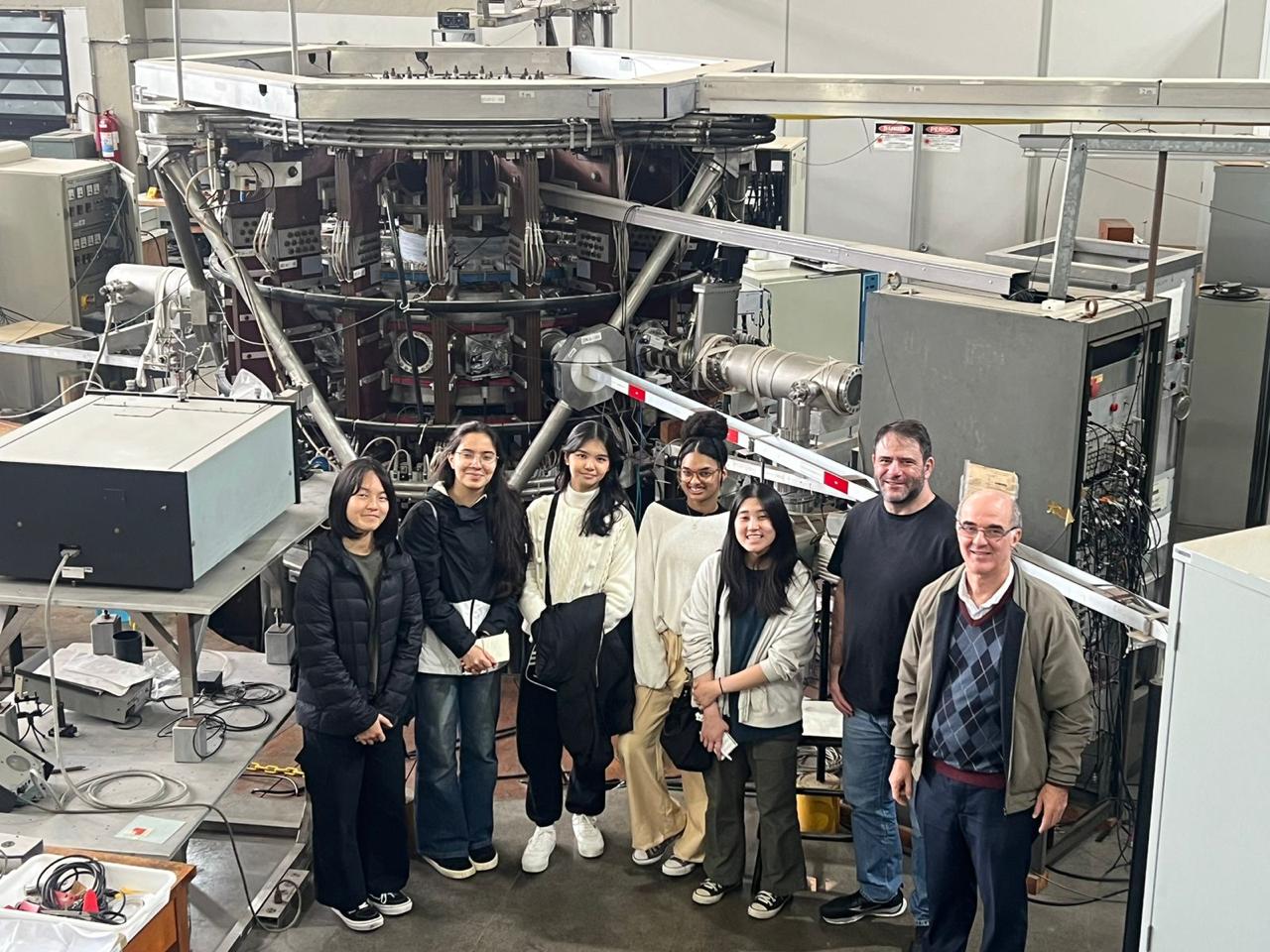
That was the moment it became clear: the project was too good to stay in a report. Olívia decided to go further — and all of that became NEXA.
The project today
NEXA was born from the perception that the world is changing in ways most young people don't yet know about. The final year of high school is one of the most decisive moments in anyone's life — it's when you choose your university course, begin to map out a career, and make the first real decisions about your future. And it's exactly at that moment that most young people have never heard of nuclear fusion, new reactor designs, or the billions being invested in energy research around the world.
Olívia noticed this and created NEXA: a space where students and young people can build their own knowledge about the nuclear field — and understand how these transformations may affect their lives and their choices.
Today, NEXA continues to grow with the work of Olívia and her partner Vitória.
Team
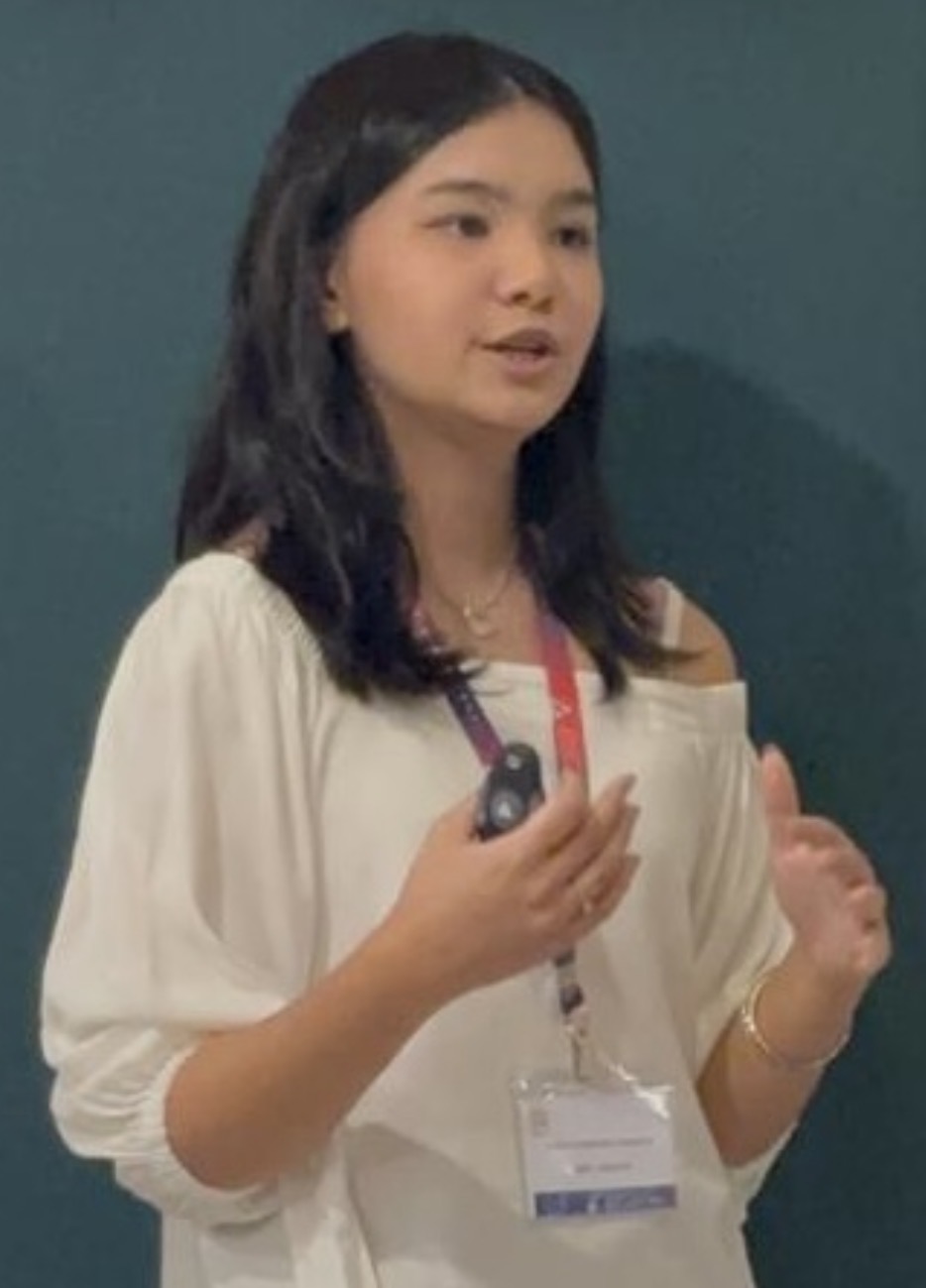
Olívia Omagari
Curious about reactors, design, and everything that blends science with storytelling. She believes science communication is, above all, an act of care.
With eclectic interests ranging from music theory to the dense theories of mathematics, she believes innovation is born from curiosity. Olívia is 17 and has a pattern that keeps repeating: when she finds something worth pursuing, she doesn't let go. From an early age, she has dedicated herself deeply to different areas — from the arts to the exact sciences — driven purely by genuine passion. She began classical ballet at three, earning Royal Academy of Dance certificates up to Intermediate 1. Around the same time, she started Kumon in mathematics and English, which gave her the first sense that any system has an internal logic that, if you stay with it long enough, begins to make sense. That trait never left. With ten years of guitar and singing lessons, she discovered that music theory and mathematics speak the same language: patterns, structure, relationships between parts. Languages followed the same curiosity: Spanish with a DELE C1 certificate, Mandarin with four years of classes and HSK4. At the same time, over four years of Python classes consolidated into yet another language for translating ideas into something concrete. That's how she found the thread connecting things that, at first, seemed so different from each other: the logic of mathematics shows up in a choreography, a musical scale, a line of code. That aptitude for mathematics always told her she'd study engineering — before she knew which kind. The answer came during her scientific research project on nuclear fusion for the STEAM Festival 2025, the moment where everything unified: the rigor of physics, the ambition of innovation, and the real urgency of contributing to the planet's energy future. She plans to study Nuclear Engineering and carry with her everything she has learned about how complex systems, when understood from the inside, can change the world. At NEXA, she works as founder and researcher, deepening the theoretical dimensions of physics while building the platform that will grow alongside her.
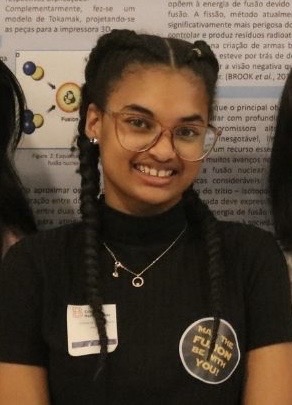
Vitória de Oliveira
Passionate about debates on climate, public management, and Brazil's role in the global energy race.
Passionate about debates on climate, economic development, and the role of education in transforming lives. She believes the world's best technologies only generate impact when they reach people. Vitória is 18 and carries one habit into everything she does: thinking several steps ahead. After spending most of her life studying in public schools, she began seeking educational opportunities that would broaden her horizons. That path led her to ISMART, a Brazilian organization that identifies and supports high-achieving students. After a competitive selection process, she earned a scholarship to Colégio Bandeirantes, expanding her access to academic and cultural opportunities. During the pandemic, she also began her English journey as an autodidact through videos, apps, and free resources. She later became fluent in Spanish and earned the DELE B2 certification. Co-author of a nuclear fusion research project presented at the 2025 STEAM Festival, she found in energy a way to bring together her interests in science, economics, and public policy. While many see the energy transition as a technological challenge, Vitória is drawn to the decisions behind it: who receives investment, which communities benefit, and how innovation can drive long-term development. At NEXA, she works as co-founder and researcher, helping connect scientific concepts to social, economic, and environmental discussions. Her interest in economics grew from the conviction that opportunities should not depend only on the circumstances someone is born into, but also on the policies and institutions that help expand them. She plans to study Economics and work with public policy focused on education, energy, and sustainable development — expanding opportunities for others the same way educational opportunities transformed her own path.